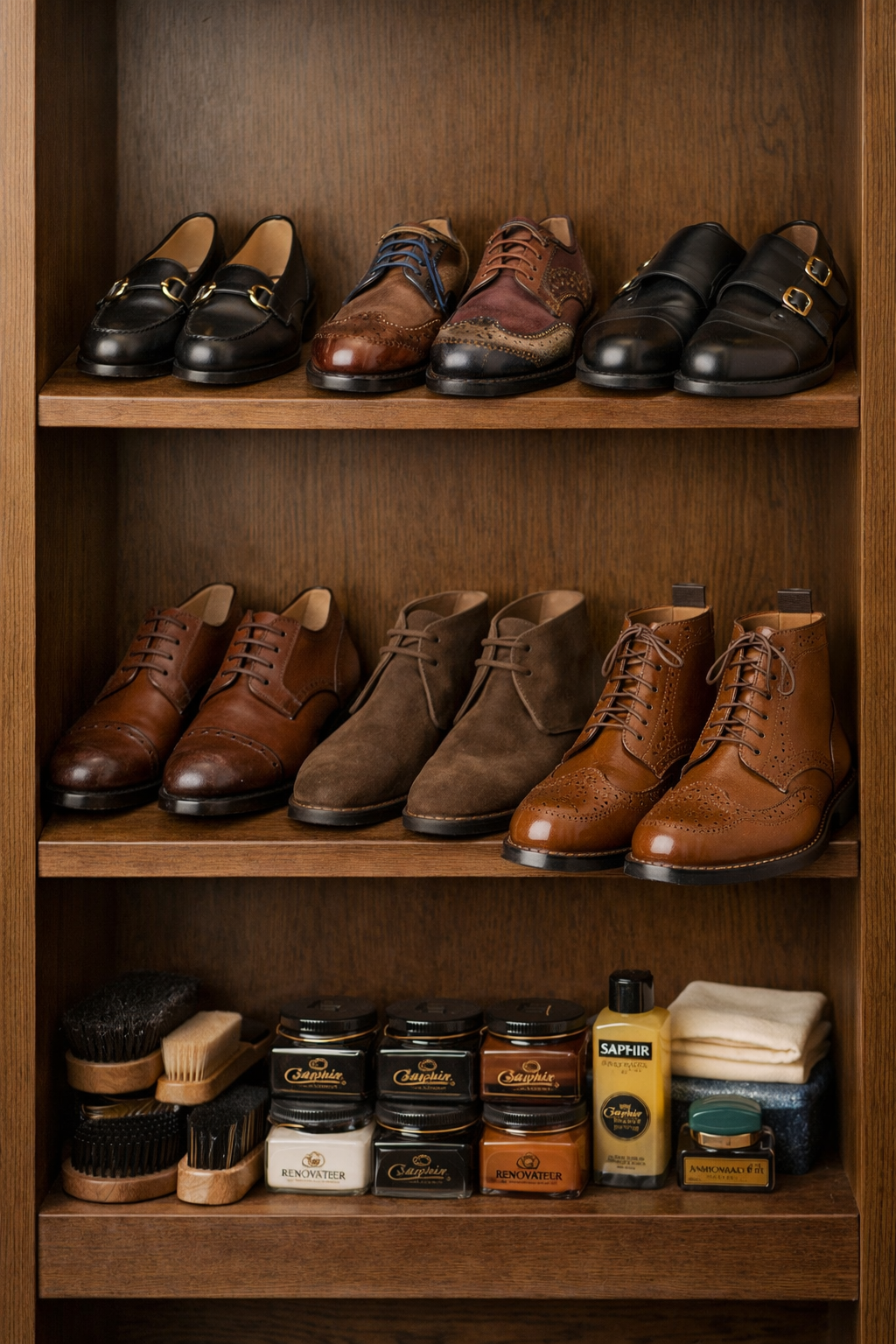
In a world dominated by fast fashion and disposable footwear, there remains a category of shoes built with patience, skill, and heritage: Goodyear welted shoes.

For those who understand quality craftsmanship, the difference between a Goodyear welted shoe and a cemented high-street shoe is night and day.

Goodyear welt is built to last decades, a cementedother is designed last for eighteen months. A cemented shoe goes to landfill and you go back to the shops for another pair.

The simple truth is that a goodyear welted shoe may cost two or three times as much, but, when properley looked after oit will last five to ten times as long.

Better quality. Extended Longevity. Improved sustainability.

Whats not to love?

Britain, in particular, is globally recognised for producing some of the finest Goodyear welted shoes in the world, with a heritage centred around the historic shoemaking town of Northampton.

If you're investing in quality footwear, these prestigious British brands represent the gold standard.

What Is a Goodyear Welted Shoe?

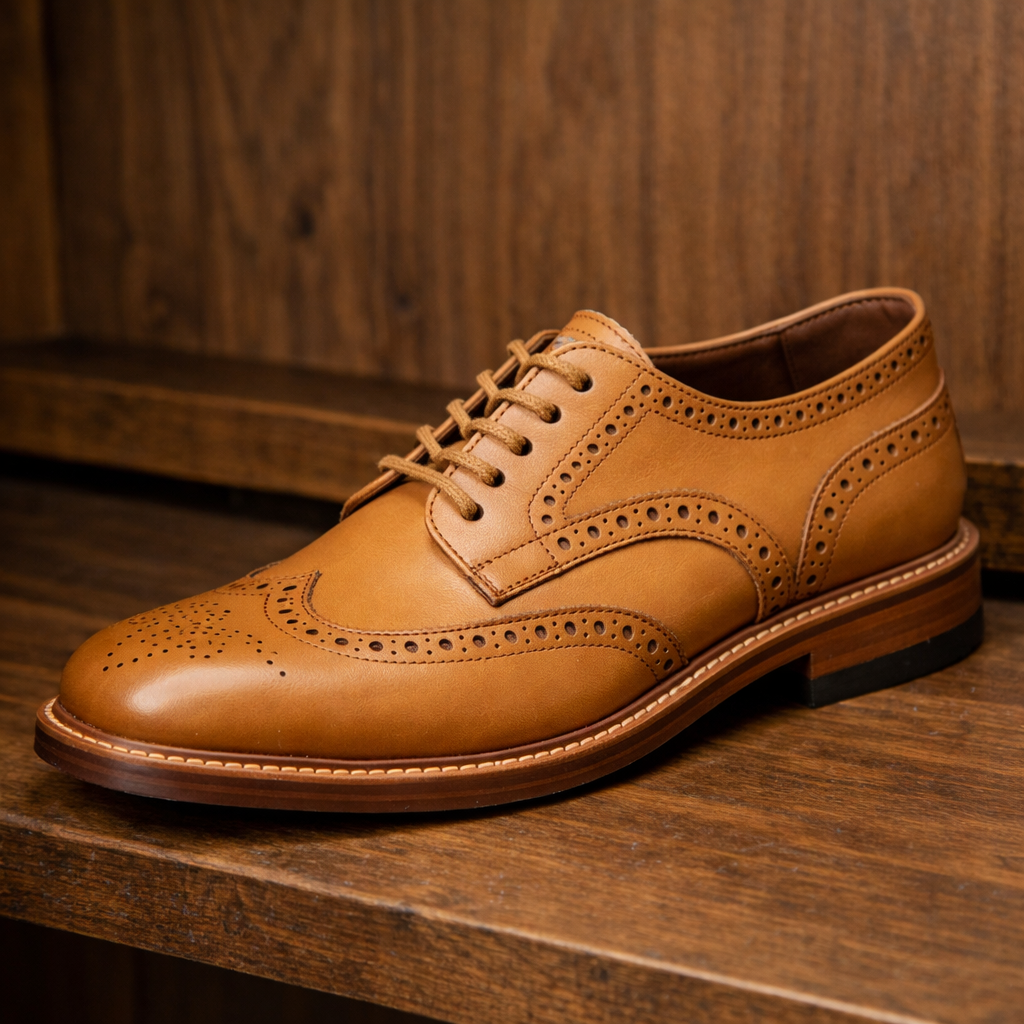
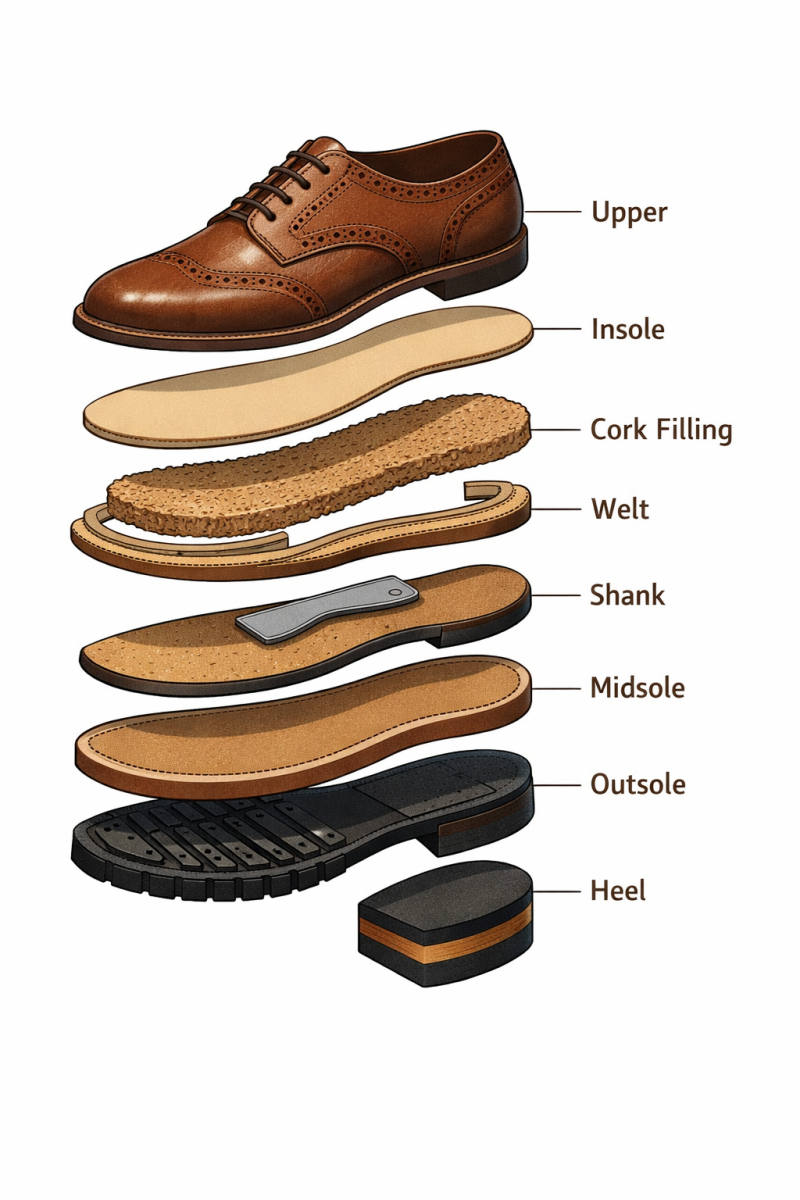
A Goodyear welted shoe is constructed using a traditional method where a strip of leather (the welt) is stitched to both the upper and the insole. The sole is then stitched to this welt.

This construction method creates:

  • Exceptional durability

  • Water resistance

  • The ability to resole shoes multiple times

  • Greater structural integrity

Unlike cemented shoes, where the sole is glued to the upper, Goodyear welted footwear can be maintained and repaired for decades.

It’s one of the reasons why true shoe enthusiasts insist: “Buy well, buy once.”

Why Are Goodyear Welted Shoes Are Superior?

1. Built to Last

High-street shoes typically rely on adhesives that break down with moisture, heat, and movement. Once the glue fails, the shoe cannot realistically be repaired.

Goodyear welted shoes, by contrast, are stitched rather than glued, making them far more durable.

2. Fully Resoleable

Because the sole is attached to the welt rather than the upper itself, a cobbler can remove the worn sole and replace it without damaging the rest of the shoe.

A quality pair of welted shoes can be resoled many times, extending their life for decades.

3. Comfort That Improves Over Time

Traditional welted shoes often contain a cork filling layer beneath the insole.

Over time, this cork compresses and molds to the shape of your foot, creating a personalised fit that becomes more comfortable with wear.

4. Superior Materials

The best British shoemakers use full-grain calf leather, vegetable-tanned insoles, and leather linings.

These natural materials breathe better, age beautifully, and develop character with time.

No composite leather mush. Less junk going to landfill.

5 Sustainability

Repairable shoes have decades of life in them if the upper is properley maintained. Fewer rubbish shoes going into landfill!

So... Why Get Welted?


For those who appreciate heritage, craftsmanship, and quality materials, Goodyear welted shoes represent the ultimate standard in footwear.

They are not disposable products — they are investments.

And once you experience the comfort, durability, and elegance of a properly made pair, there’s rarely any going back.

As Shoficiandos (or in reality me....just me) often say:


Shoes. You either Get Welted… or You don’t.

March 2026

You Don’t Have a Shoe Size


You don’t have a shoe size.

I know—that sounds wrong. But stick with me.

When it comes to proper shoes, especially handmade Goodyear-welted ones, “size” doesn’t really mean what people think it means. What you’re actually looking for is the right fit.

Over the years, I’ve fitted thousands of pairs of quality shoes, and one thing I always tell people is this: forget the number—focus on how the shoe fits.

Yes, you can measure your foot. Length, width, all of that. It helps. But it only gets you in the right ballpark. Your foot isn’t a block of wood—it’s a moving, slightly uneven, very individual thing.

And here’s something I see all the time…

A man walks in and asks for a size 10. We measure him, and he’s actually closer to an 8.5.

Happens constantly.

Why? I’m not entirely sure. Somewhere along the way, people started thinking they need more length when what they actually need is more width.

So what happens?

Someone who should be in a generous 8.5 G ends up in a 10 F. Then they wonder why the shoes crease badly across the vamp, don’t look as good after a few months, or even why they occasionally catch their toes on the pavement.

It’s not the shoe—it’s the fit.

So, problem solved then? Just find your “true size” and you’re done?

Not quite.

Here’s the part most people don’t realise: handmade shoes vary—a lot. Between different makers, and even within the same brand, the fit can change depending on the last. A country last will feel very different to a sleek city one.

That’s why you don’t just grab a box off the shelf because it says your usual size.

You try them. You feel them. You pay attention.

The old saying is that a good shoe should feel like a firm handshake for your foot—and honestly, that’s a pretty good way of putting it.

No pinching in the toe box.

A bit of pressure across the vamp when laced (a touch more for loafers).

A bit of support under the arch.

And no slipping at the heel.

Get those right, and you’re in a very good place.

I could go into far more detail on each of those—and I probably will in future posts.

But for now, if you’re spending anywhere from £400 to £2,000 on a pair of shoes, do yourself a favour:

Don’t buy a size.

Find your fit.

And if you’re not sure where to start, just drop me a message.


Read more »

Shoe Of The Week


One  goodyear welted shoe per week.

Every week.

With notes., no messing.

We'll include links e.g. retail/ebay/vinted when possible.


Read more »

Shoe of the week no.1: Appleton Toecap Oxford - Brown Museum Calf


Its ebay/vinted etc only for this one I am afraid. (unless you are size 5 in which case head to the Trickers factory shop.)

Photos don't really do it justice.

It looks like someone made a pair of shoes out of a beautifully maintained George III card table.

Yes, it is  showy, but it dresses up and down more readily than you might think.

Anyone got a boxed pair of 7.5? 

Read more »

Add comment

Comments

There are no comments yet.

Goodyear Welted Brands worth exploring:


Barker
Founded in 1880 in Northamptonshire, Barker remains a respected name in British shoemaking. Its shoes are known for elegant finishing, heritage craftsmanship, and a blend of classic and contemporary styling.

Pricing: £££

Cheaney
Joseph Cheaney & Sons has been crafting shoes in Northampton since 1886. The brand balances traditional workmanship with modern design while maintaining a strong reputation for high-quality Goodyear-welted footwear.

Pricing: £££

Church’s
Established in 1873, Church’s became one of the most recognisable names in British footwear. Although now owned by Prada, its heritage remains rooted in traditional Northampton shoemaking.

Pricing: ££££

Crockett & Jones
A Northampton institution since 1879, Crockett & Jones produces a broad range of Goodyear-welted shoes known for durability and understated elegance. It is especially associated with timeless British style.

Pricing: £££

Edward Green
Founded in Northampton in 1890, Edward Green is celebrated for meticulous finishing, clean lines, and exceptional leather quality. The brand is widely admired for its understated, classic British style.

Pricing: ££££

John Lobb
Often regarded as the pinnacle of British shoemaking, John Lobb combines traditional craftsmanship with refined elegance. Its ready-to-wear and bespoke shoes are globally recognised among the finest available.

Pricing: ££££

LANX
Founded in Lancashire in 2018, LANX is a modern British footwear brand focused on durable boots and shoes inspired by northern heritage. The company emphasises British design, distinctive styling, and clear regional identity.

Pricing: £££

Loake
Established in 1880, Loake offers one of the most accessible entry points into Goodyear-welted footwear while preserving traditional construction methods. Its 1880 range is particularly well regarded by enthusiasts.

Pricing: £££

Tricker’s
Founded in 1829, Tricker’s is one of Britain’s oldest shoemakers. Best known for robust country footwear, the brand produces iconic brogues and boots built for the British countryside.

Pricing: £££

Contact

Opening Hours

Mon - Fri: 9am - 5pm
Saturday: 10am - 3pm
Sunday: Closed

Contact

info@getwelted.co.uk

Socials